
I didn’t expect the hardest part of using Mounjaro to be this strange no-man’s-land: the place where the weight loss slows to a crawl, but the next dose up feels financially out of reach.
At the start, it worked. The noise quietened. The constant obsession with food softened. The scale moved, and with it came relief—hope, even. For the first time in years, I felt like my body and my brain were finally on the same team.
And then… it stalled.
Not completely. But enough to make every week feel like a question mark. Enough to make me wonder whether I was doing something wrong. Enough to make me look at the price of a higher dose and feel that familiar, sinking frustration: I can’t afford to do the thing that might actually help me.
It’s a deeply uncomfortable impasse—being “lucky” to be losing weight at all, yet stuck in a place where progress feels conditional on money.
The NHS, Gatekeeping, and Feeling Left Behind
What makes this harder is knowing that, in theory, help should be available.
In reality, the NHS makes accessing medications like Ozempic or Mounjaro incredibly difficult unless you fit into a very narrow set of criteria. You can be overweight for years. You can struggle with your mental health. You can do all the “right” things—diet plans, exercise attempts, self-blame—and still be told you don’t qualify.
So people like me end up in the private system, paying out of pocket for something that feels medically and psychologically necessary, while knowing full well we can’t sustainably afford it long term. My parents have even helped me pay for Mounjaro, which both makes me feel blessed and ashamed all at the same time.
It creates a two-tier experience: those who can keep going because they have the money, and those who have to pause or stop just as things start to shift.
That doesn’t just affect bodies. It affects morale. It affects trust. It affects mental health.
The Body Changes No One Warns You About
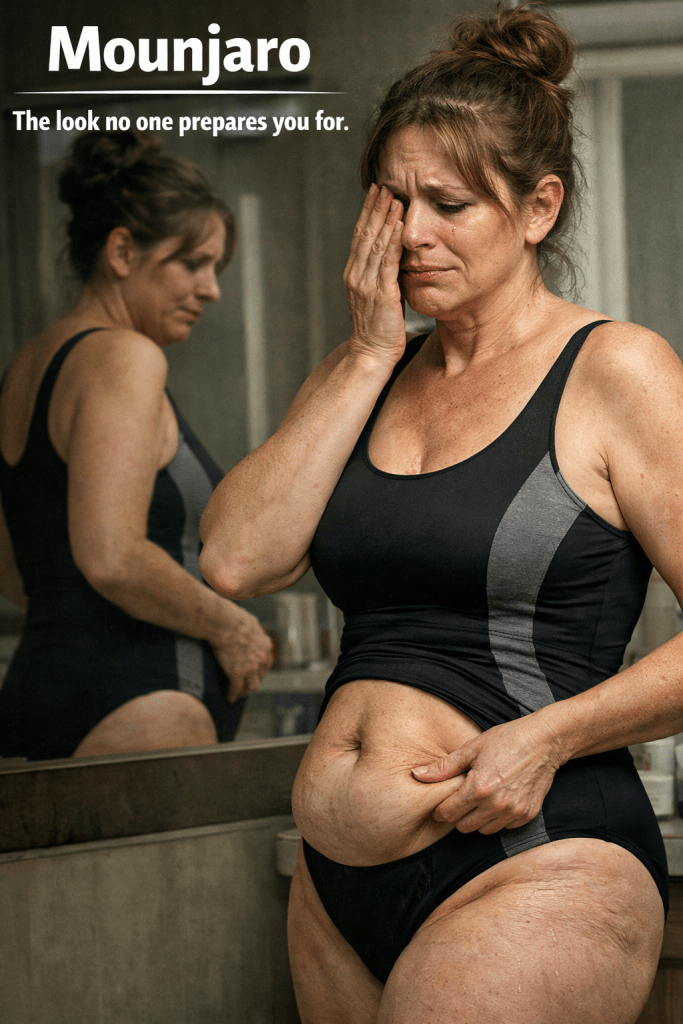
I expected loose skin in theory. What I didn’t expect was how confronting it would be in practice.
The bingo wings.
The apron belly.
The way my skin no longer springs back the way it once did.
Instead of feeling lighter, I sometimes feel… older. More tired-looking. More haggard. Like the years of being overweight are finally leaving their mark now that the weight itself is shifting.
There’s a cruel irony there. I’m doing something positive for my health, and yet when I look in the mirror, the reflection feels harder to sit with than before.
This isn’t vanity. It’s grief. It’s mourning the body I hoped I’d reveal underneath the weight—and realising that time, hormones, and long-term strain have changed it permanently.
And yes, it’s seriously affecting my mental health.
Losing Weight for My Mind, Not Just My Body
One of the biggest reasons I started this journey wasn’t aesthetics—it was my mental health.
I wanted relief. I wanted to feel comfortable in my skin again. I wanted to enjoy life more fully, including the holiday my partner and I are planning to take to Tunisia. I pictured myself walking more easily, feeling more confident, and being present instead of self-conscious.
Right now, that feels complicated.
Instead of feeling excited, I’m worrying about my arms in the heat. My stomach in lighter clothes. Photos. Mirrors. The fact that I might weigh less but feel worse about how I look.
That’s a bitter pill to swallow when the whole point was to heal, not to create a new set of anxieties.
When the Long-Term Effects Catch Up
I think this is the part no one really prepares you for: the delayed consequences of being overweight for a long time.
The skin that’s lost its elasticity.
The way weight loss can expose exhaustion rather than erase it.
The sense that your body is telling the story of everything it’s been through.
It’s confronting to realise that even when you do something good for yourself, the body doesn’t reset to factory settings. It carries history.
And sometimes, that history shows up in ways that make you feel older than you are.
What I Want to Do Going Forward
I don’t have a neat ending or a tidy solution. But I do have intentions.
I want to stop measuring success solely by the scale.
I want to explore strength training and skin-supportive care—not as punishment, but as kindness.
I want to talk more openly about the mental health side of weight loss, because pretending it’s all positive helps no one.
I want to be realistic about medication: what I can afford, what I can sustain, and how to advocate for myself within a system that isn’t built for nuance.
Most of all, I want to remember why I started.
Not to be perfect.
Not to look twenty again.
But to feel better in my own life—and to find a way forward that doesn’t cost me my mental health in the process.
If this journey has taught me anything so far, it’s that weight loss isn’t linear, and healing definitely isn’t either. And maybe the bravest thing I can do right now is admit that this part is hard—and keep going anyway.
To Anyone Else Stuck Here Too
If you’re in this strange middle space—where the weight has come off but the relief hasn’t fully arrived—I want you to know you’re not failing. You’re not ungrateful. And you’re not imagining how hard this is.
Plateaus, money worries, loose skin, and the emotional whiplash of changing your body all at once can mess with your head in ways no one really talks about. Especially when you started this for your mental health and find yourself feeling more fragile instead of freer.
You’re still allowed to want better support. You’re still allowed to grieve the body you hoped for while appreciating the progress you’ve made. And you’re still worthy of care—at every weight, at every stage, even when the journey doesn’t look the way you imagined.
If nothing else, please know this: you’re not alone in this impasse. And there is no shame in taking this one slow, imperfect step at a time.

 May Contain Chocolate
Leave a comment